

Opinion: Credibility Will Decide if Hong Kong Can Lead on Biodiversity Finance
Summer of 2026 has turned out to be a season of extremes. The city experienced the wettest July in 32 years with 790 millimetres of rain, immediately followed by the hottest day ever recorded on August 9 at a scorching 36.9 degrees Celsius at the Hong Kong Observatory headquarters. Extreme weather events are intensifying Hong Kong’s heat and flood hazards, threatening the city’s infrastructure and livability, and illustrating how climate change is reshaping its risk landscape.
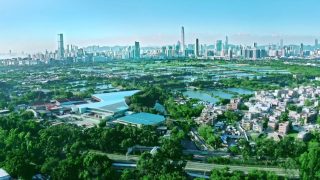
Against escalating climate pressure, major development projects such as the Northern Metropolis present rare opportunities to rethink conventional urban development by strategically centring biodiversity and climate resilience. As new industries and capital flows emerge in some of Hong Kong’s greenest areas, there is a growing recognition that nature must be integrated into infrastructure planning and hence, financial decision-making, to fund such projects.
However, efforts to “green” development also carry the risk of superficial gestures and potential greenwashing. The question becomes: how can we finance projects to meaningfully integrate nature elements and deliver measurable ecological outcomes?
A Whole-of-Society Model for Nature Finance
Nature‑based solutions (NbS) are well‑researched for reducing flood, heat and storm impacts, and the government has begun integrating them into policy, as evidenced by the city’s first NbS Design Guidelines. This push toward nature‑positive development is anchored in the principle of “Co‑existence of Development and Conservation,” originally set for the Northern Metropolis but increasingly shaping planning across the city. For example, in mid-2026, a Hong Kong property developer secured its first biodiversity loan to plant 400 native trees and implement smart monitoring systems for the Central Yards development.
As nature‑related finance evolves, ecological assets are increasingly being reflected on balance sheets, with the private sector recognising nature’s financial value for managing both physical and transition risks. Moving beyond reliance on government budgets to fund biodiversity, the emerging nature-finance opportunities enable Public-Private-Philanthropic Partnership (“PPPP”) to scale nature-positive development, where:
- Public sector sets mission, policy alignment, guarantees, and catalytic de‑risking
- Private sector brings scale, structuring, capability, and capital markets pathways
- Philanthropy sector absorbs early risk and funds preparation
This PPPP structure strengthens the whole‑of‑society vision in Hong Kong’s Biodiversity Strategy and Action Plan (BSAP) by drawing on the distinct strengths of each sector, positioning the city to lead the region in nature‑positive planning and biodiversity‑linked finance.
To make this cross‑sector model work in practice, stakeholders must operate with aligned expectations and consistent measurement frameworks, ensuring that nature outcomes are assessed with the same ruler and reducing the space for (unintentional) greenwashing.
Beware of Greenwashing Potential

Without rigorous ecological baselines and evidence‑based reporting, the same weaknesses that have plagued parts of climate action — ambiguous net‑zero pledges, selective disclosure and loose “nature positive” claims — could easily take hold in nature projects (Box 1). Greenwashing in biodiversity measures can occur when an organisation makes vague, deceptive or even false claims about its positive environmental impact.
For example, greenwashing may occur when greenery is used primarily as a marketing device rather than as an ecological intervention. Researchers have warned of potential greenwashing of NbS in the real estate sector, in which developers may render illustrations of gardens or green walls in pre-sale properties that may not materialise, or exaggerate their projects’ proximity to green spaces.
Poor quality nature‑based offsets can also undermine biodiversity and its supposed climate benefits. For example, inappropriate tree planting on natural grasslands or peatlands can release more carbon into the atmosphere than they take up. There can also be negative impacts on biodiversity if native species that depend on naturally open habitats are displaced.
Greenwashing also extends beyond in-situ habitats. Biodiversity finance intersects with wildlife‑product supply chains, where banks may unknowingly finance companies linked to endangered species. Research by EIA UK identified 62 major banks that have publicly expressed concerns or signed pledges about biodiversity loss and species extinctions, have nevertheless invested in pharmaceutical groups connected to products containing endangered leopard, pangolin, tiger or rhino. Biodiversity risk, therefore, lies not only in-situ but also in global trade networks.
The Foundations of Nature-Positive Finance
While greenwashing is a risk across all sustainability projects, it is especially pronounced in biodiversity because the field rests on three contested foundations:
- Values — biodiversity can be seen as intrinsic or instrumental, and this lack of consensus allows organisations to select whichever value framing best supports their narrative.
- Metrics — unlike carbon (measured in CO₂ equivalents), biodiversity metrics range from species richness to genetic diversity to soundscapes. This plurality allows organisations to deflect attention and selectively report convenient indicators.
- Causation — ecosystems are complex and open, making it hard to link specific financial actions to ecological outcomes. This gap enables decoupling, where organisations claim impact without demonstrating any real causal effect.
 Greenwashing is often not necessarily about malicious deception but may arise when different actors work from different assumptions on how to measure impact. As shown in the case studies in Box 1 and Box 2, a lack of consensus and regulatory safeguards may allow organisations to overstate impact and prioritise easy, visible targets over ecologically important ones, while unclear causal links can further allow unproven tools to be misleadingly marketed as ecologically impactful, even when evidence is weak or absent. For Hong Kong, these global challenges highlight that funding nature‑positive projects will require aligned value frameworks, consistent ecological metrics and credible causal pathways to ensure nature-positive claims are comparable and harder to misinterpret. Although companies are increasingly complying with environmental impact reporting frameworks such as Science Based Targets for Nature (SBTN), International Sustainability Standards Board (ISSB) and Taskforce on Nature-related Financial Disclosures (TNFD) for nature-related risk assessment and disclosures, credibility will ultimately depend on taxonomies that provide definitions and quantifiable metrics. Including biodiversity elements clearly into guidelines such as Hong Kong’s Taxonomy for Sustainable Finance will ensure that funding flows to genuinely nature-positive projects.
The Nature Funding Gap
One critical view of the much‑quoted US$700 billion annual biodiversity “funding gap”, i.e., the suggested shortfall between current public funding and what is needed to protect nature, sees it less as a scientific estimate than an ideological construct. Developed by institutions linked to Goldman Sachs and JP Morgan, the US$700 billion claim frames biodiversity loss as a financial deficit, encouraging private capital as the default solution. This narrative risks greenwashing by shifting attention away from the extractive economic systems driving biodiversity decline and toward an endless stream of financial products that rest on fuzzy definitions of “sustainable use”. For example, fisheries budgets in countries like Seychelles and Vietnam have been criticised for being classified as biodiversity-related spending, despite little evidence that they have improved marine ecosystems. Similarly, treating NbS as a license or “offset” to legitimise unsustainable resource extraction is not a path to biodiversity recovery. Equating success solely with the amount spent risks masking destructive practices and distracting from the systemic changes needed to shift toward a truly nature‑positive economy.
To fund nature projects meaningfully, I believe it is necessary for Hong Kong to curate more aligned and meaningful values, metrics and causation linkages for nature. In practice, this means outcome-based indicators and regulated disclosures to direct financial investments towards science-based projects with robust baselines and long-term ecological outcomes.
At the same time, to truly grasp nature’s worth, Hong Kong must look beyond economics and recognise its value within broader social and environmental contexts. This is particularly important for the Northern Metropolis development and achieving true “Co‑existence of Development and Conservation” as discussions continue around how to manage existing ecologically and culturally rich areas such as fish ponds, wetlands and coastal ecosystems. Integrating cultural knowledge into planning tools, or embedding locally tailored social KPIs into sustainability bonds and other financing instruments, helps ensure that decisions reflect the full spectrum of what nature provides. Having a wider lens shows how choices about natural resources shape lasting benefits for people, the planet and ultimately the economy, far beyond short‑term gains.
Governance, Regulation, and the Opportunity Ahead
Hong Kong already has strong policy foundations to support biodiversity financing, from the government’s Taxonomy for Sustainable Finance, BSAP to the NbS Design Guidelines. Moving forward, investors increasingly want confidence in biodiversity claims to ensure meaningful use of capital. At the same time, certain intrinsic and relational ecological values, such as beauty or sense of place, cannot be priced effectively under the current economic system and must be safeguarded through policy and community empowerment. Focusing on nature finance, the driving force behind any next step in policy or business decisions lies in building trust across the whole of society.
In the book chapter “Can the Finance Sector Be Trusted? Greenwashing, Greenhushing and Greenwishing” which I’ve recently coauthored, I outline practices that could enhance transparency:
- Update the Taxonomy for Sustainable Finance: Include biodiversity and conservation categories. For example, Hong Kong’s taxonomy can reference the China Green Bond Endorsed Projects Catalogue, which already recognises biodiversity and ecological protection
- Integration with planetary boundaries: Align quantifiable biodiversity metrics, such as habitat connectivity indices and species population recovery data, with global ecological thresholds to ensure reporting reflects systemic risks
- Independent verification: Require third‑party ecological audits rather than relying solely on self‑reported metrics
- Open data platforms: Publish biodiversity metrics, baselines and monitoring results in publicly accessible databases
- Long‑term monitoring: Track ecological outcomes over full life‑cycle impacts rather than narrow project scopes
- Community participation: Empower local communities to play a direct role in nature projects to capture social values and traditional knowledge.
If Hong Kong embeds these practices, the city can become a pioneering example of a high‑integrity biodiversity finance hub, where capital supports genuine restoration, communities benefit and nature becomes a core part of urban development. By executing these strategies well, Hong Kong can avoid greenwashing risks and establish itself as a trusted leader in nature‑positive leadership.

Latest Updates


