Completed Survey: “Fantastic Reef Fish and Where to Find Them”
After more than a decade of underwater research, the “Fantastic Reef Fishes and Where to Find Them—Field Guide of the 114°E Hong Kong Reef Fish Survey” has finally been published this week. The hefty tome shows Hong Kong’s marine biodiversity has immense potential for further research.
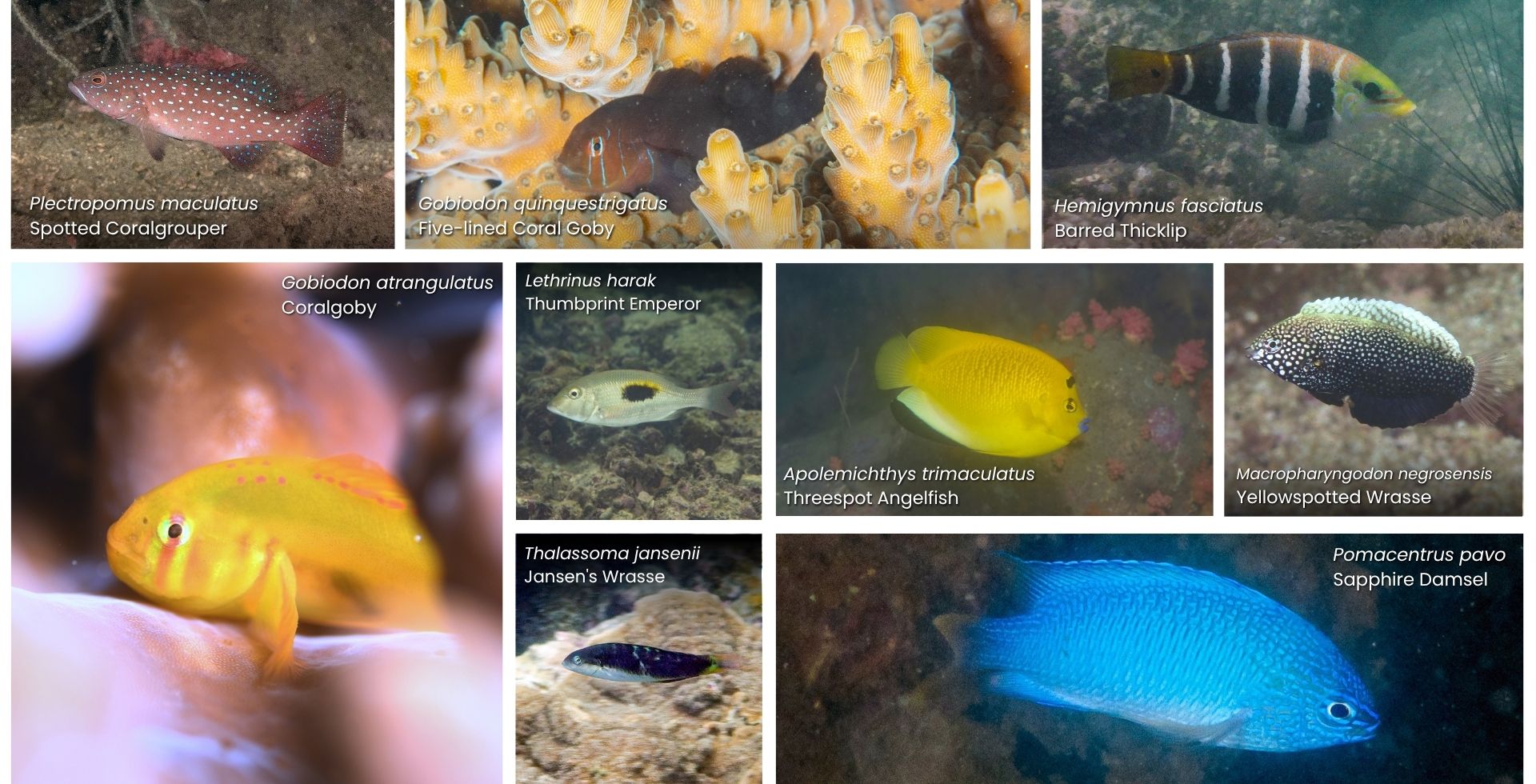
Our friends at BLOOM Association Hong Kong and a team of diving volunteers conducted an extensive survey of Hong Kong waters to document 422 reef fish species from 91 families, including nine species that have not been recorded in Hong Kong before. The resulting compendium is complete with colorful photographs, species information, reef fish ecological stories, and divers’ observations and interactions with reef fish.
The guide is now available at bookstores through publishers Word by Word and a sneak peek of the book is available on our Instagram. You can also find out more about the background of the project and the relation to Hong Kong’s Marine Protected Areas in our article “Murky Depths to Biodiversity Hub: How Hong Kong’s Waters Reveal More Marine Life than Expected”
We spoke with Stan Shea, Marine Programme Director at BLOOM/ ADMCF about the field guide and how marine enthusiasts can help protect Hong Kong reef fish.
Much Needed Research
Q: Did the project uncover any gaps in reef fish knowledge?
A: Before this book, the last comprehensive publications about reef fish in Hong Kong was published in the 2000s and 2010s. This project is hence one of the few long-term reef fish related research that is currently taking place in Hong Kong. There are definitely many gaps that remain, such as the biology of each specific species. We hope that this publication can inspire more students to take up reef fish research in Hong Kong to enable our city to create more research-informed conservation solutions.
Fluctuating Populations
Q: What are some changes you observed during the decade of diving for this project?
A: There are many changes that have taken place. For example, certain species seem to boom in Hong Kong every few years, while others remain relatively stable. These examples tell the story of juvenile fish recruitment in our waters. As changes in nature happen slowly and over a long period of time, long-term monitoring projects like our annual survey are essential for understanding the trends and patterns over time.
One example is Jordan’s damsel, which we found in large aggregations in 2025. In other years, the species is quite rare and usually found singly or in small groups. Another example is mudbank filefish, which we found everywhere in one single year. In the years after that, they had almost disappeared, appearing in only a few dives. For more of these stories, check out our new publication.
A Purposeful Publication
Q: What were the biggest challenges you faced while doing this project?
A: One of the biggest challenges we faced was in the initial project pitching phase, helping people outside of our group to see that there is a need for such a publication in Hong Kong. Our team had a clear vision for how the book would turn out, and how it can be used after publication by fish lovers, scuba divers and snorkelers, nature enthusiasts, and schools. But bringing this message across to people and asking them to buy into this vision required us to tell our story in a different way.
For example, one of the end uses we are working towards is for schools. Marine conservation topics are rarely taught in schools in Hong Kong and even fewer classrooms, if any, have existing lesson materials to talk about the local reef fish diversity. But how can we nurture the next generation of marine conservationists, if there aren’t even any available materials to teach students about what marine wildlife we have in our waters and why they need to be protected?
So, at a very early stage we already created detailed mock-ups to help illustrate what we hoped to achieve. This included book content mock-ups, as well as exemplary lesson plans for how the publication could be used in the school curricula. So, you could say that we had already started the work in detail before the project officially started.
Rare Finds in Hong Kong
Q: What was the biggest surprise for you that came out of this project?
A: That there are a lot of species for which the research, or even underwater photographs, are scarce globally. When doing the research for our book, we noticed that there are certain behaviours of fish which were recognised by global databases or existing literature to be rarely observed, but we had photographed them during our surveys. This reconfirms the importance of the observations and research we do here in Hong Kong.
For example, the blackfin dartfish are usually observed in pairs or in small groups. In one of our dive surveys, we came across an aggregation of several dozen, which was quite unusual. After looking through the existing literature, we found that such aggregations are rarely recorded not only in Hong Kong, but also in other places where the species is found. We don’t know why these aggregations take place, and it goes to show how much there is left to learn about marine life.
Calling For More MPA
Q: Which Hong Kong marine areas emerged as biodiversity hotspots and will the project outcomes be used to influence any policy changes?
A: The research to reveal Hong Kong’s biodiversity hotspots is part of another element of the 114°E Survey project, and we are working hard on it now. The results will be released later on. What I can reveal for now is that one of the hotspots, Sharp Island, is already being considered for designation as a new marine protected area by the Hong Kong SAR government.
Doing Your Part
Q: What is something that Hong Kong people can do to help protect reef fish?
A: Caring comes from knowing. Through our survey and the new book, we would love to see more Hong Kong people become interested in local reef fish diversity. In the long term, we would like to see admiration transform into behaviour change, such as choosing sustainable seafood consumption.
The thing with reef fish is that their habitats are often right on our shores. By protecting our coastal habitats, Hongkongers can play a direct part in protecting our marine life. Especially when visiting the coastlines for fun, we can observe simple etiquette to ensure our activities don’t leave a negative impact on the area.
For example, we should observe marine life, including fish, shellfish, crabs, corals without touching or disturbing them. Definitely, don’t pick them up or try to move them around. Bring our trash home with us, and keep an eye on our belongings so that they don’t fall into the ocean by accident. If we’re swimming close to the coral, beware of our bodies and movements so that we don’t kick or trample the coral. Above all, keep in mind that our actions have a direct impact on marine life, and if we are careful to protect them now, we will enjoy them in the future.

Latest Updates